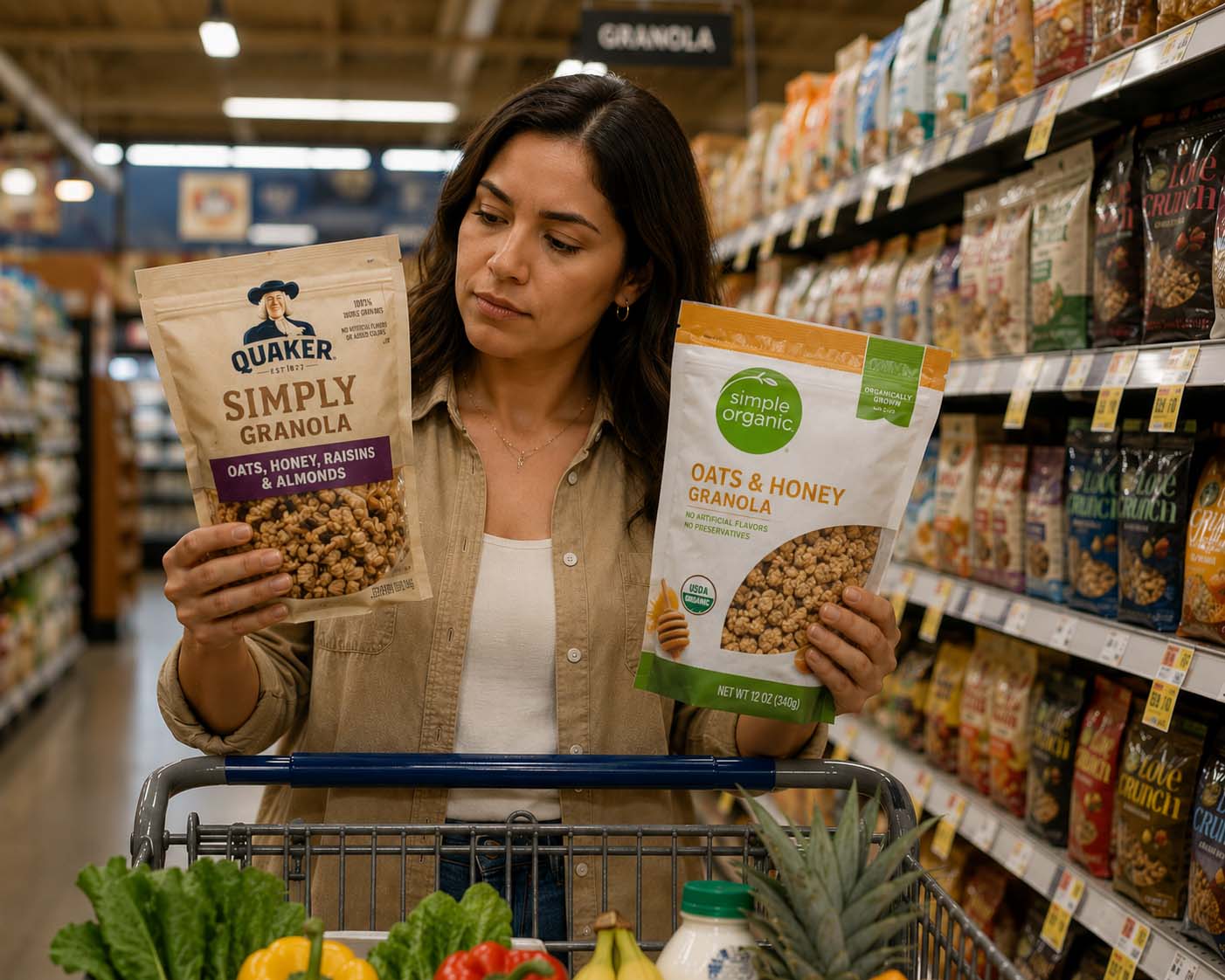
A strategic package can make a sourced product look credible, memorable and worth choosing before a shopper has ever touched it.
White-label products give Amazon sellers speed. A manufacturer already has the formula, tool, accessory, supplement, device, or household item. The seller can source it, list it and let Fulfillment by Amazon (FBA) handle storage, shipping, customer service and returns. The challenge is that many sellers can source similar products from the same factories. When the item is not exclusive, the brand experience has to do more commercial work.
That is where professional packaging design becomes a growth asset rather than a cosmetic expense. The package is the most visible proof that the seller has turned a generic product into a considered brand. It appears in the main image, gallery, A+ Content, review photos, unboxing videos and future line extensions. For a white-label Amazon FBA product, the pack is often the first evidence that it deserves to be compared with an established national brand.
Amazon FBA Makes Packaging Both Operational and Persuasiveetes Like National Brands
FBA simplifies fulfillment, but it does not remove packaging responsibility. Amazon's FBA prep guidance explains that sellers still need secure packaging, scannable labels, appropriate preparation for product type and compliance with Amazon receiving requirements. Inadequate packaging can lead to refused inventory, returns, repackaging fees or additional prep requirements based on damage-related returns.
The best packaging strategy has two jobs. It must survive the fulfillment path from supplier to Amazon to customer, and it must communicate quality online and after delivery. A plain factory label may identify a SKU, but it rarely answers the deeper customer question: Is this product trustworthy enough to buy from a brand I have never heard of?
The Package Is a Quality Signal When the Brand Is Unknown
White-label products often enter categories crowded with lookalike offers. The product may be good, but shoppers cannot smell the lotion, feel the fabric, test the tool grip, or judge a supplement brand's seriousness from the ingredient panel alone. They rely on signals. Color, typography, photography, material, naming, claim hierarchy and layout all help the shopper estimate quality before purchase.
NielsenIQ BASES research on packaging design describes packaging as a brand asset with distinct responsibilities: get noticed, communicate difference, reassure the buyer and build equity after purchase. NIQ also reports that optimized package designs generated an average 5.5% lift in forecasted revenue, a useful reminder that packaging decisions can affect commercial outcomes when tested and improved.
Academic research points in the same direction. A 2026 eye-tracking study of food packaging found that visual strategies changed attention, expected quality and purchase intention under controlled conditions. That does not mean every product should use the same tactic, but it supports a practical point: when quality is hard to verify before purchase, packaging becomes a shortcut for credibility.
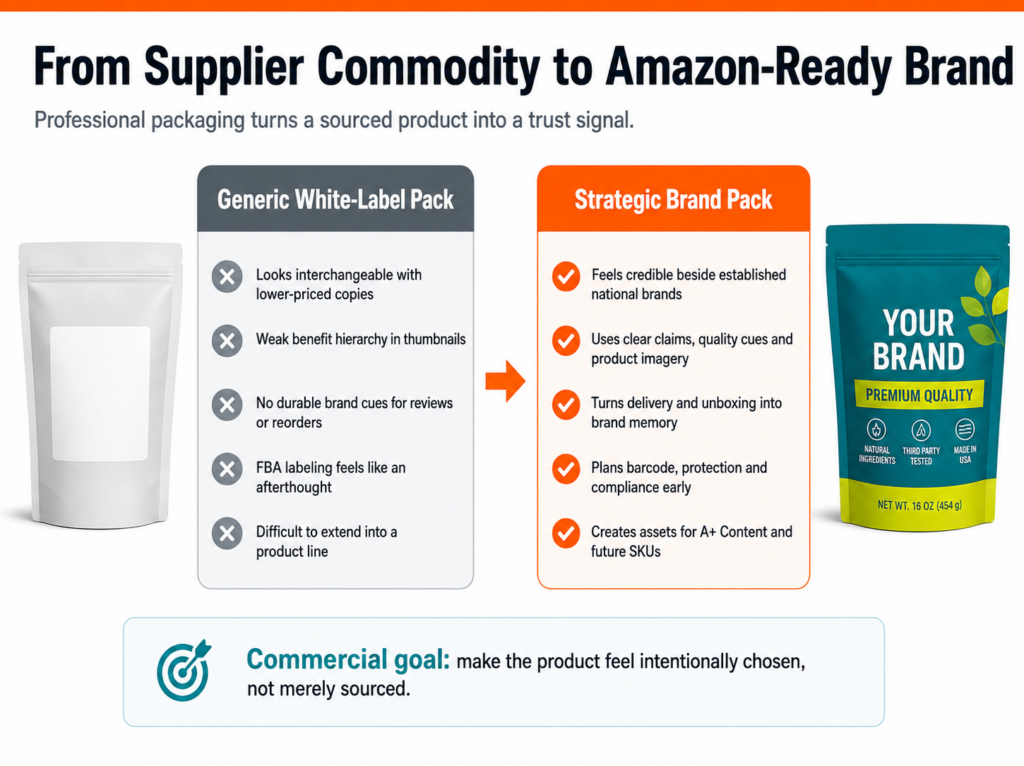
On Amazon, packaging works first as a digital asset. Amazon's product listing guide defines the product detail page as the place where the customer evaluates the product name, images, description and offer. The same guide notes that accurate, high-resolution product images help customers see what they are buying. For white-label sellers, that means the package must be designed with thumbnail visibility and image-gallery storytelling in mind.
Better Packaging Improves Listing Quality Before It Improves Sales
A professional package gives the photographer, designer and listing writer stronger raw material. A clear front panel can become a readable hero image. A strong side panel can support feature callouts. A refined color system can make comparison charts and lifestyle graphics feel like a real brand ecosystem. The packaging should provide the visual vocabulary for the entire listing.
Amazon Ads' Sponsored Products best practices state that product information and detail-page quality can directly affect ad performance and sales. The guidance recommends strong titles, positive reviews, multiple high-quality zoomable images, bullet points and A+ Content. Packaging design cannot replace pricing, inventory, reviews or keyword relevance, but it can make paid clicks work harder.
Professional Design Reduces Doubt at the Moment of Conversion
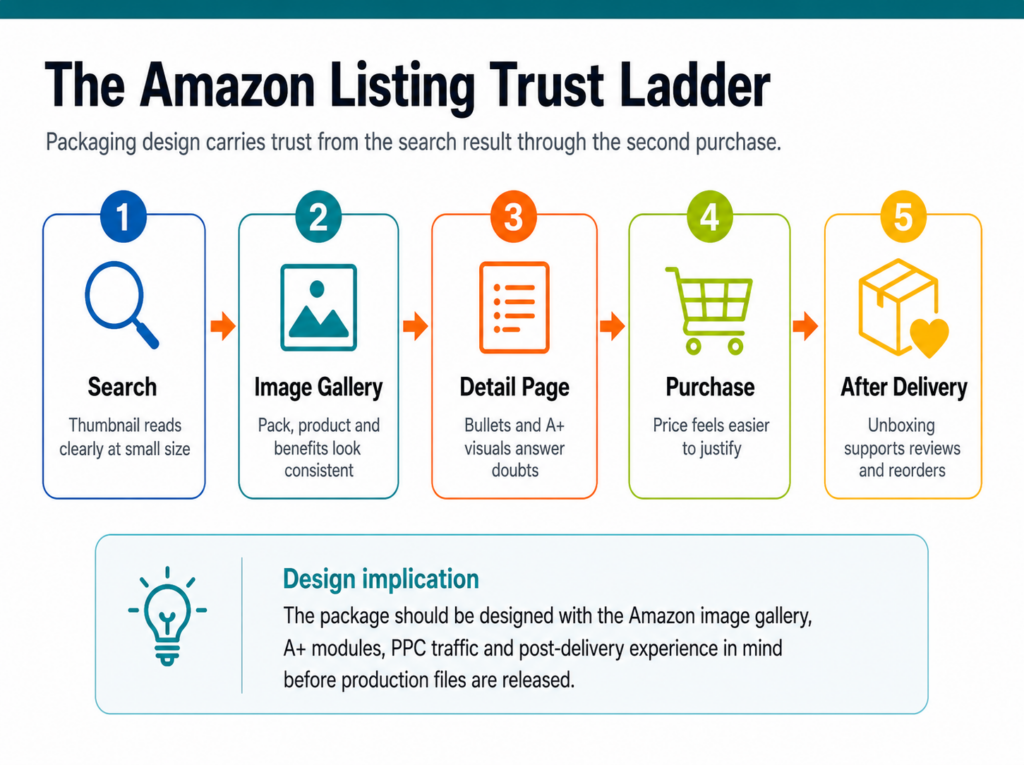
A white-label listing has to answer objections quickly: What is different? Is the product safe? Is the brand legitimate? Why does this cost more? Will it arrive in good condition? A professional packaging system organizes those answers visually. The brand name, claim hierarchy, certification marks, material cues, usage icons, compliance copy and warnings should be planned as one hierarchy.
That hierarchy matters because Amazon shoppers move between comparison and decision in seconds. A listing with a polished pack, consistent photography and clean infographics looks less risky than one where the photo says one thing, bullets say another and the package looks like it came from a supplier catalog.
A+ Content Extends the Package Story
For eligible sellers, A+ Content gives the brand more room to explain benefits. Amazon's A+ Content page says Basic A+ Content can increase sales by up to 8%, while well-implemented Premium A+ Content can increase sales by up to 20%. Amazon also describes A+ Content as a way to add videos, enhanced images, customized text placements, shoppable comparison charts and other rich content to product detail pages.
Those modules work best when they feel connected to the package the customer saw first. The same benefit hierarchy, color palette, typography and proof points should carry from the physical pack into the listing. A+ Content should feel like the expanded version of the promise already visible on the box, pouch, jar or label.
The Review, Unboxing, and Repeat-Purchase Effects
FBA fulfillment may put the product in an Amazon box, but the customer still meets the brand when the primary package is revealed. If the product arrives protected, organized and visually consistent with the listing, the experience confirms the expectation created before purchase. If the pack looks cheaper than the listing or fails to protect the item, ownership starts with a trust deficit.
Amazon's A+ Content design guide recommends using content to answer common questions and reduce purchase barriers, including Q&A modules that can help customers make educated decisions and reduce returns. That same mindset should shape physical packaging. Usage instructions, refill information, storage guidance, QR codes, inserts and support details can reduce confusion after delivery.
Premium Pricing Depends on a Premium Signal
Many white-label sellers try to escape price pressure by adding features, improving bundles or targeting a more specific customer. Packaging helps make that strategy believable. A higher price is easier to defend when the pack looks intentional, claims are disciplined, materials feel appropriate and presentation matches category expectations.
That does not mean every Amazon product needs luxury packaging. A value brand can still look professional. A technical product can look precise rather than decorative. A wellness product can look clean without becoming generic. The strategic question is not, How expensive can the package look? It is, What visual evidence will make the target buyer believe this product is the safer, smarter or more satisfying choice?
Packaging Prepares the Brand for What Comes After the First SKU
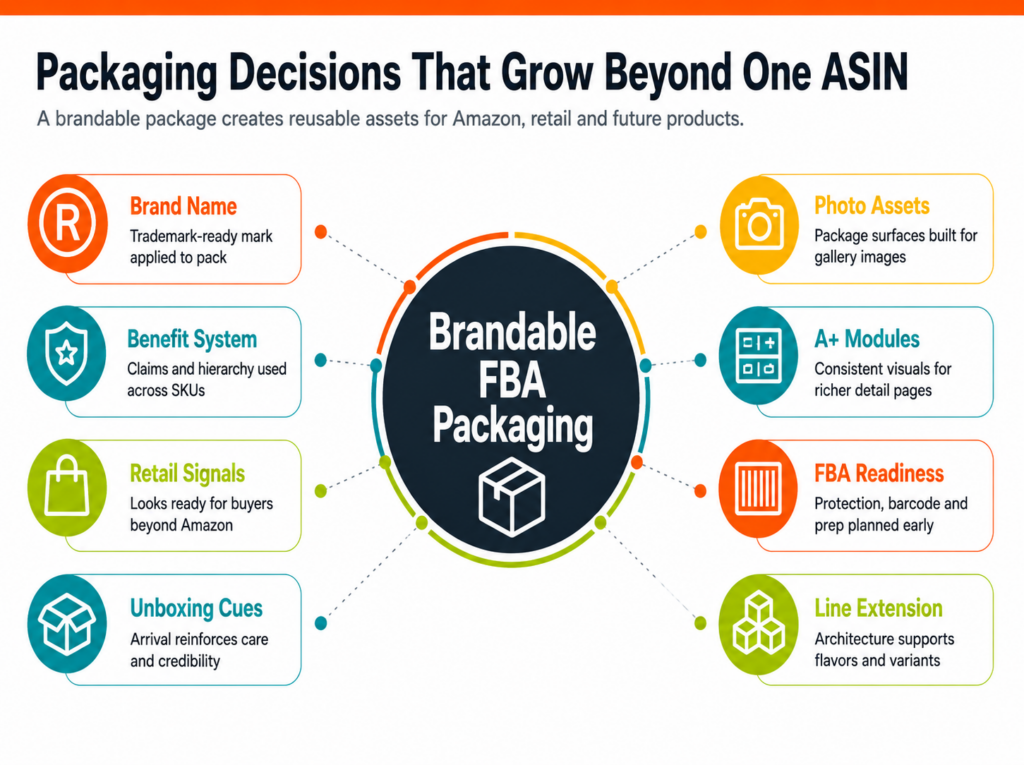
A common white-label mistake is designing only for the first listing. That may work for a test launch, but it creates drag when the seller adds flavors, sizes, bundles, refills, accessories or retail-ready versions. The better approach is to design the first package as the beginning of a brand system, with naming, color coding, benefit zones, variant panels and photography rules planned early.
Amazon Brand Registry also raises the strategic value of branding early. Amazon says enrollment requires a logo with the brand name permanently affixed to the product or packaging, plus an eligible trademark. Packaging is not the only requirement, but a professional package can help sellers move from anonymous sourcing toward a brand platform that supports Brand Registry, A+ Content, Stores, experiments, advertising and future product-line growth.
Practical Recommendations for White-Label Amazon FBA Sellers
Start with positioning. Define the buyer, price tier, category expectations, competitive set and reason to believe before exploring design styles. For help on developing your Amazon white label product lines, contact Deal Design.
©2026 Deal Design Inc. All rights reserved.