A single package can launch a SKU. A brand system can help white-label products earn recognition, support cross-selling and grow into a more valuable business.
White-label products are often chosen for speed: the product exists, the supplier can manufacture it, and the seller can move quickly into Amazon, ecommerce, or retail channels. That speed is useful, but it can also tempt a company into treating each package as a separate artwork assignment. One product gets one style, the next gets another, and the brand slowly becomes a shelf of unrelated ideas.
That is a costly way to build a product business. A package can introduce one SKU, but a cohesive brand can make several SKUs easier to recognize, trust, bundle, review, reorder, advertise and present to buyers. For white-label products, brand strategy is what turns sourced inventory into a business with memory, structure and future value.
The Problem With One-Off Package Designs
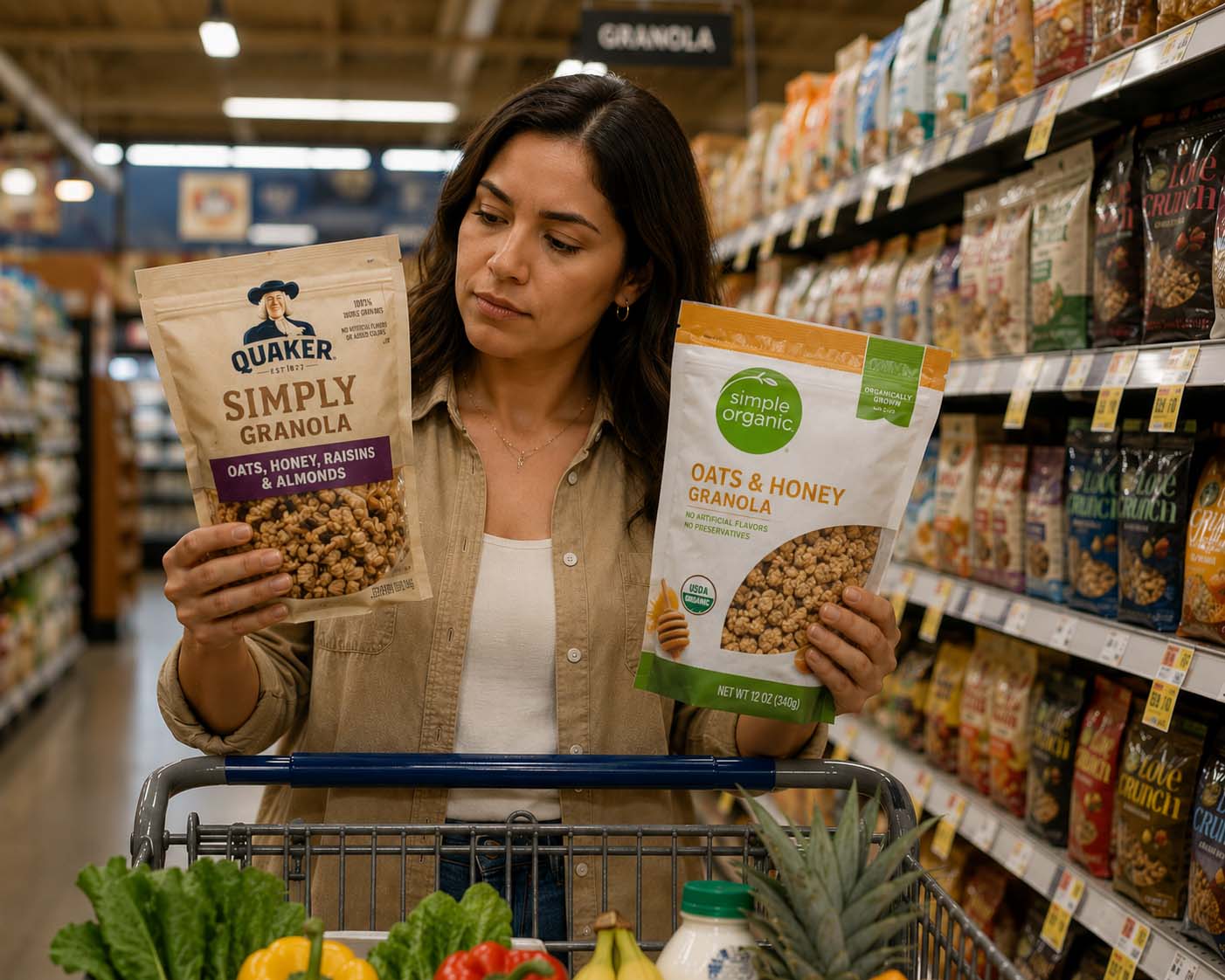
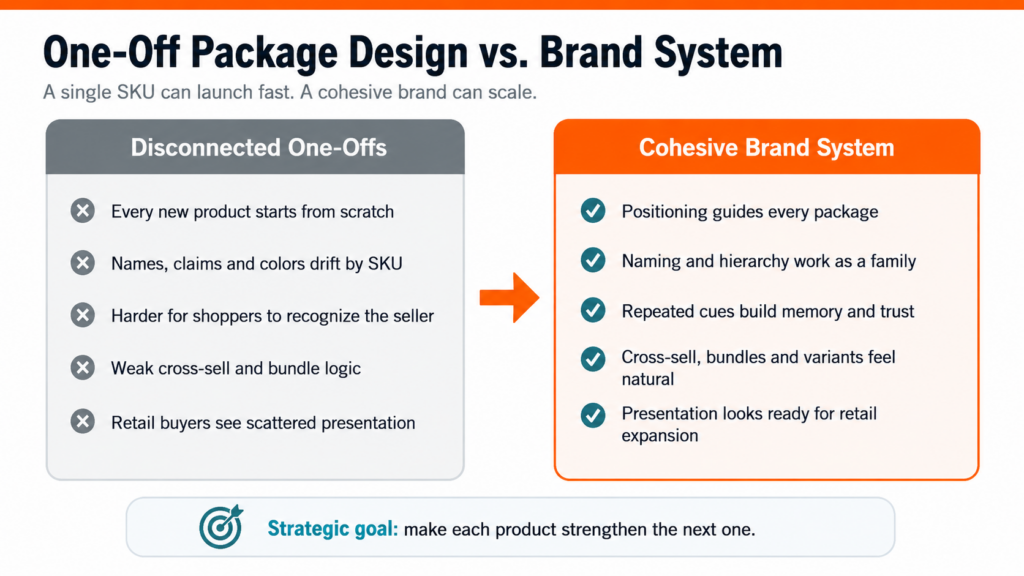
A one-off package may look attractive in isolation. The trouble appears later. A seller adds a second scent, flavor, size, kit, refill or accessory, and the new package does not know what to inherit. The name may be different in tone, the benefit hierarchy may move, the color system may contradict the first product, and the photography may feel unrelated. Instead of building recognition, each launch asks the customer to start over.
This is especially dangerous for white-label brands because the product itself may not be exclusive. If competitors can source something similar, the brand has to carry more of the differentiation. Deal Design's packaging design process emphasizes competitive analysis, messaging, imagery, production planning and brand identity standards because good packaging is not only the final graphic file. It is the operating system for how a product line should look, speak and grow.
Amazon Brand Registry Rewards Real Brand Thinking
Amazon gives stronger brand tools to sellers who build brands rather than anonymous listings. Amazon Brand Registry says enrollment requires a logo that includes the brand name permanently affixed to the product or packaging, plus a pending or registered trademark issued by the relevant government office. The USPTO trademark basics page likewise frames names and logos used to advertise a business as potential trademarks that can be protected through federal registration.
A disconnected package library makes that path harder. Which name is the real brand? Which logo should be filed? Which visual identity should appear on the packaging? A cohesive system helps answer those questions early, before inventory, listing assets and legal filings drift in different directions.
A Brand System Supports More Amazon Growth Tools
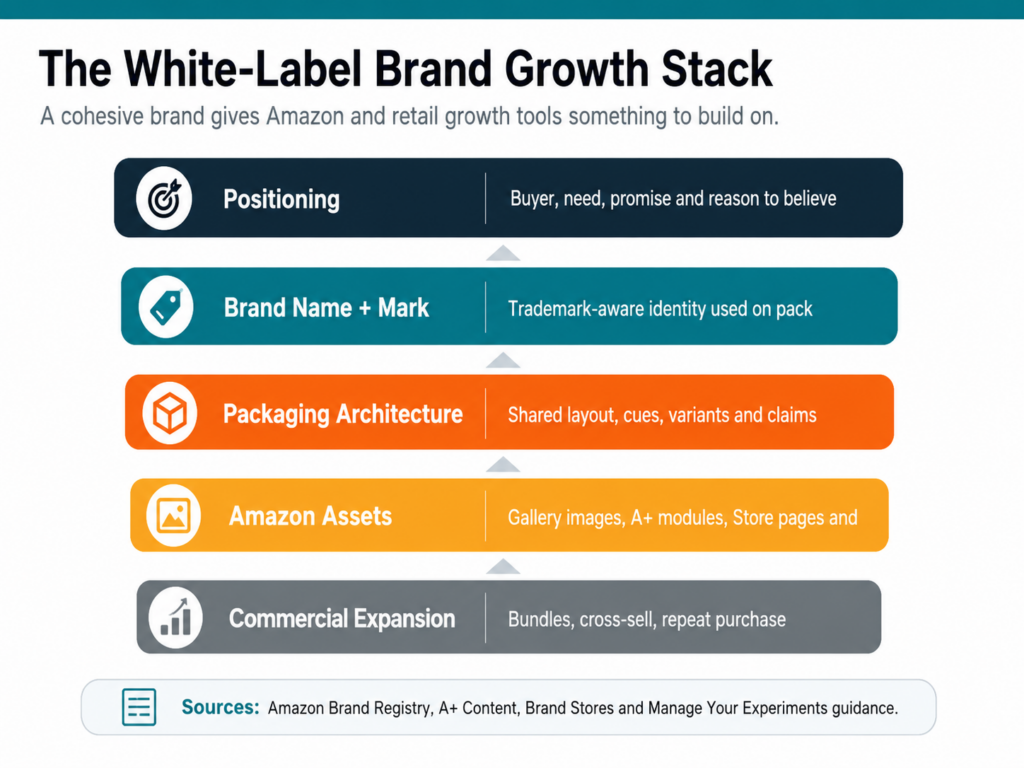
After enrollment, Amazon describes Brand Registry as a way to unlock tools that help protect and grow a brand, including A+ Content, Brand Analytics, Brand Stores, Sponsored Brands and Manage Your Experiments. Amazon's A+ Content page says enhanced content can add videos, images and comparison charts to product detail pages. Amazon's Manage Your Experiments tool lets eligible brand owners test listing content such as images, titles, bullets, descriptions and A+ Content.
These tools work better when the brand has rules. A+ modules can reuse the same hierarchy. Product images can feel like a family. Comparison charts can make cross-selling intuitive. The Brand Store can organize the product line around a clear story instead of a loose catalog. Amazon Ads reports that new-to-brand shoppers who visited a Brand Store were 62.7% more likely to purchase than those who did not, based on Amazon internal data from August 2024. That is not a guarantee for any individual seller, but it shows why a brand destination matters.
A Cohesive Brand Improves Cross-Selling and Repeat Purchase
Cross-selling depends on recognition. A customer who liked the first product should be able to identify the refill, companion product, larger size, starter kit or premium version without feeling lost. A consistent brand mark and naming system make related products easier to understand, while controlled variation helps the shopper choose the right option.
Repeat purchasing depends on memory. If every package looks unrelated, the customer may remember the product but not the brand. If the system is consistent, the package becomes a reminder of the prior experience. Kantar's 2024 article on meaningful difference says strong, consistent brand connections predispose people to buy a brand more often, in more places and for a higher price. For white-label products, that is the commercial difference between selling units and building demand.
Retail Buyers Prefer a Brand They Can Understand Quickly
Retail presentation is another reason to avoid disconnected design. A buyer reviewing a sell sheet, planogram mockup or sample shipment needs to understand the line quickly: what the brand stands for, which products belong together, how variants are organized, what price tier the line occupies, and why the packaging will make sense on shelf.
A cohesive brand gives that story structure. It can show a hero SKU, a good-better-best ladder, a flavor family, a regimen, or an accessory ecosystem. It also makes the manufacturer and printer conversation cleaner because recurring elements, dielines, finishes and art rules can be managed more consistently. Deal Design's branding services and Amazon product packaging design capabilities are built around that larger commercial picture: strategy, package design, photography, illustration, writing and production support working together.
Practical Recommendations for White-Label Brand Building
Name the brand before naming every product. A strong master brand gives future SKUs a common parent and keeps the business from becoming a pile of unrelated product names.
Build a packaging architecture guide. Define fixed elements such as logo placement, type hierarchy, claim order and photography style, then define flexible elements such as color coding, flavor labels, size callouts and sub-benefits.
Design for Amazon and retail at the same time. The package has to work in thumbnails, image galleries, A+ Content, Brand Stores, review photos, unboxing and eventual buyer presentations.
Treat every SKU as a brand deposit. Each package should make the next product easier to launch, not harder. When the system is working, new products feel both familiar and fresh.
A Product Can Be Sourced as White Label, But the Brand Should Not Feel Generic
White-label sourcing can be a smart operational choice. Disconnected packaging is usually not. A cohesive brand gives the business a point of view, creates recognition, supports trust, prepares for Amazon Brand Registry, strengthens cross-selling and makes future product-line expansion more efficient.
Deal Design helps entrepreneurs, Amazon sellers, manufacturers and product companies turn individual packages into brand systems that can grow. If your next white-label product is meant to become more than a one-SKU test, review Deal Design's package and label design, Amazon packaging design and branding services, or request a project estimate to plan the line before the artwork fragments.
©2026 Deal Design Inc. All rights reserved.