Consumers Prioritize Organic Before Brand Loyalty
For decades, national CPG brands dominated grocery purchasing decisions through familiarity, advertising scale, and shelf visibility. That hierarchy is changing. Increasingly, consumers evaluate the organic attribute before evaluating the brand name itself.
Research using Nielsen Homescan data published through Agecon Research Studies found consumers frequently prioritize “organic vs. non-organic” before comparing national brands against private-label products. This behavior is particularly strong in categories tied closely to wellness perception, including dairy, produce, beverages, snacks, and baby food.
This represents a significant shift for grocery retailers and private-label programs. Historically, store brands competed primarily on value pricing. Organic certification has changed that equation by allowing retailer-owned products to compete on perceived quality, sourcing standards, and health trust—not just price.
Consumers increasingly interpret organic labeling as a product-level assurance system independent of the manufacturer name. In many cases, shoppers now view organic certification itself as more important than the national brand behind the package.
That trend has accelerated as retailers have improved their own-brand quality standards, packaging systems, sourcing transparency, and merchandising sophistication. Store brands are no longer viewed as generic substitutes. Many are now treated as destination brands within grocery environments.
Trust in Organic Private Label Continues Rising
Private-label perception has evolved dramatically over the past decade. According to research cited by Food & Wine using NielsenIQ data, nearly 60% of shoppers now trust store brands as much as national brands, while many consumers view retailer-owned products as equal or superior in quality.
This trust expansion has been especially pronounced within organic categories.
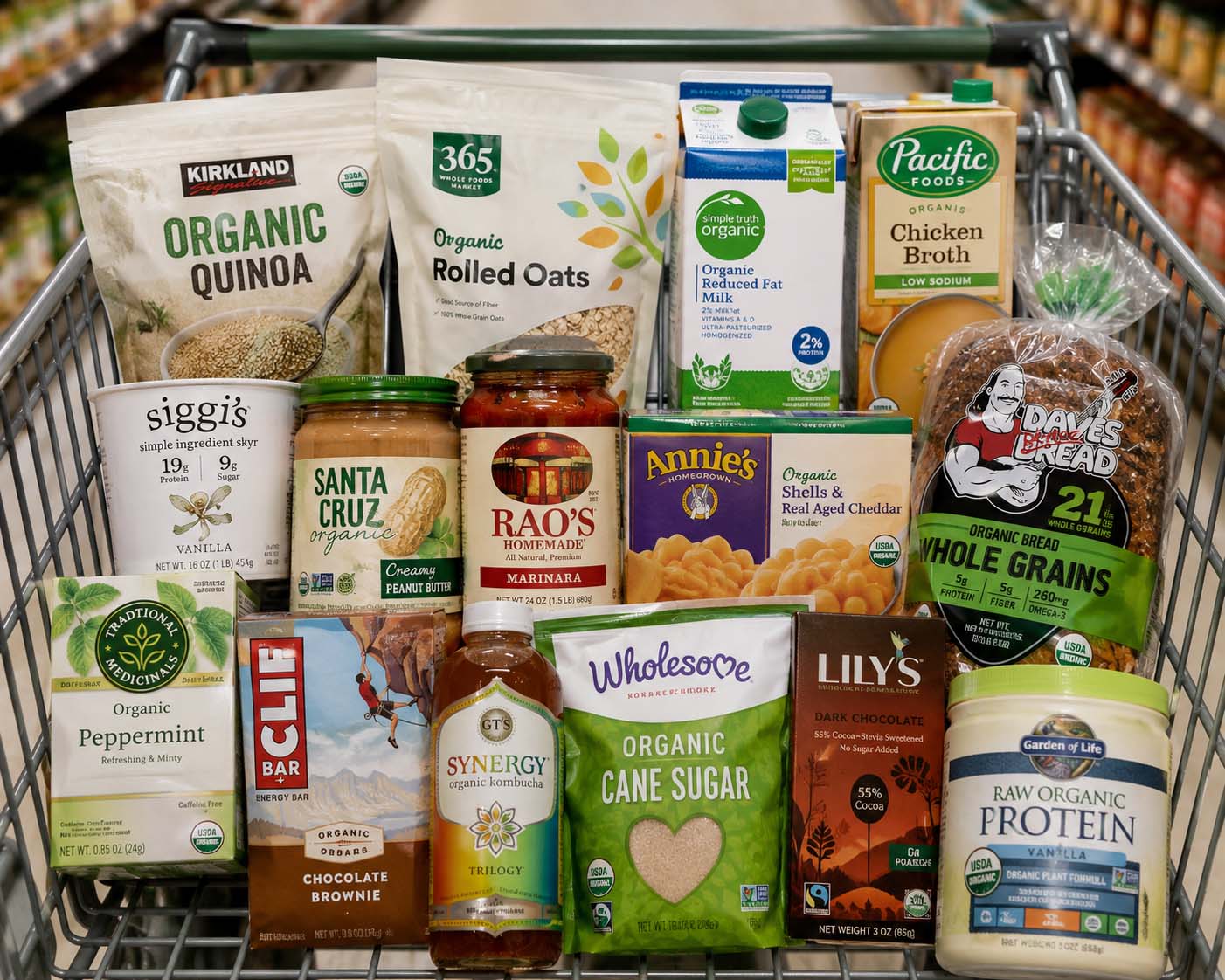
Retailers such as Kroger with Simple Truth, Target with Good & Gather, and Whole Foods Market with 365 have invested heavily in premium packaging, ingredient transparency, and product innovation. These private-label lines now operate with the sophistication of national CPG brands while retaining stronger pricing flexibility.
Consumers increasingly associate retailer-owned organic products with:
- Ingredient transparency
- Reduced Processing
- Sustainability
- Cleaner sourcing standards
In many categories, retailer-owned organic brands benefit from proximity trust. Shoppers already trust the retailer environment, which transfers credibility to the private-label product itself.
This evolution is changing shelf dynamics. National brands can no longer rely solely on brand recognition when competing against retailer-owned organic alternatives positioned beside them on shelf with lower pricing and comparable packaging quality.
Price Architecture Gives Own-Brand Organics an Advantage
Price remains one of the most important competitive levers within organic grocery. Research from Private Label Manufacturers Association shows consumers increasingly view private-label products as delivering both value and quality simultaneously.
This creates a powerful position for retailer-owned organic products.
National organic brands often carry pricing premiums driven by:
- Marketing overhead
- National distribution
- Trade spending
- Media investment
Private-label organics frequently operate with leaner cost structures and direct retailer support, allowing them to offer lower shelf pricing while maintaining strong margins.
Retailers also benefit strategically because own-brand organics improve:
- Category profitability
- Customer loyalty
- Store Differentiation
Unlike national brands competing across retailers, private-label organics are exclusive to the retailer environment. This exclusivity increases shopper retention and reduces direct price comparison pressure.
Consumers increasingly view this equation favorably:
- Organic certification provides trust
- Retailer ownership provides value
- Lower pricing reduces trade-off anxiety
The result is a product architecture where many consumers willingly choose private-label organic products over conventional national brands because they perceive stronger overall value.
Organic Certification Has Become the Real Brand
One of the most important changes occurring within grocery retail is that organic certification itself has evolved into a form of brand equity.
According to studies published in Food Quality and Preference Journal, organic labeling significantly increases perceived quality, trustworthiness, and purchase likelihood among consumers.
This means the USDA Organic seal increasingly functions as a shortcut trust system that transcends traditional brand awareness.
Consumers today are highly accustomed to evaluating:
- Ingredient panels
- Sourcing claims
- Certification logos
- Sustainability indicators
- Health benefits
As shoppers become more educated, traditional advertising power becomes less dominant compared to perceived product integrity.
This does not eliminate the importance of branding. Instead, it changes branding priorities. Packaging systems, shelf presence, tone of voice, and product transparency now work together to reinforce organic trust rather than simply promote brand identity alone.
For grocery retailers and private-label programs, this shift creates major opportunity. The retailer no longer needs decades of national advertising history to compete effectively. Organic certification, quality execution, and strong packaging design can now establish credibility much faster than in previous generations of CPG marketing.
---
Deal Design continues to lead the CPG and Own-brands (Private Brands) packaging design industry with best and most innovative ideas and orginal creativity in packaging design that increased product sales.
©2026 Deal Design, Inc. All rights reserved. Some brands shown are trademarked by their respecitve owners.